Private5G.ca Industrial Wireless Knowledge Base
Industrial 5G Network Coverage Planning
RF coverage planning, propagation analysis, dead-zone identification, hotspot mapping, and interference modelling for industrial wireless environments.
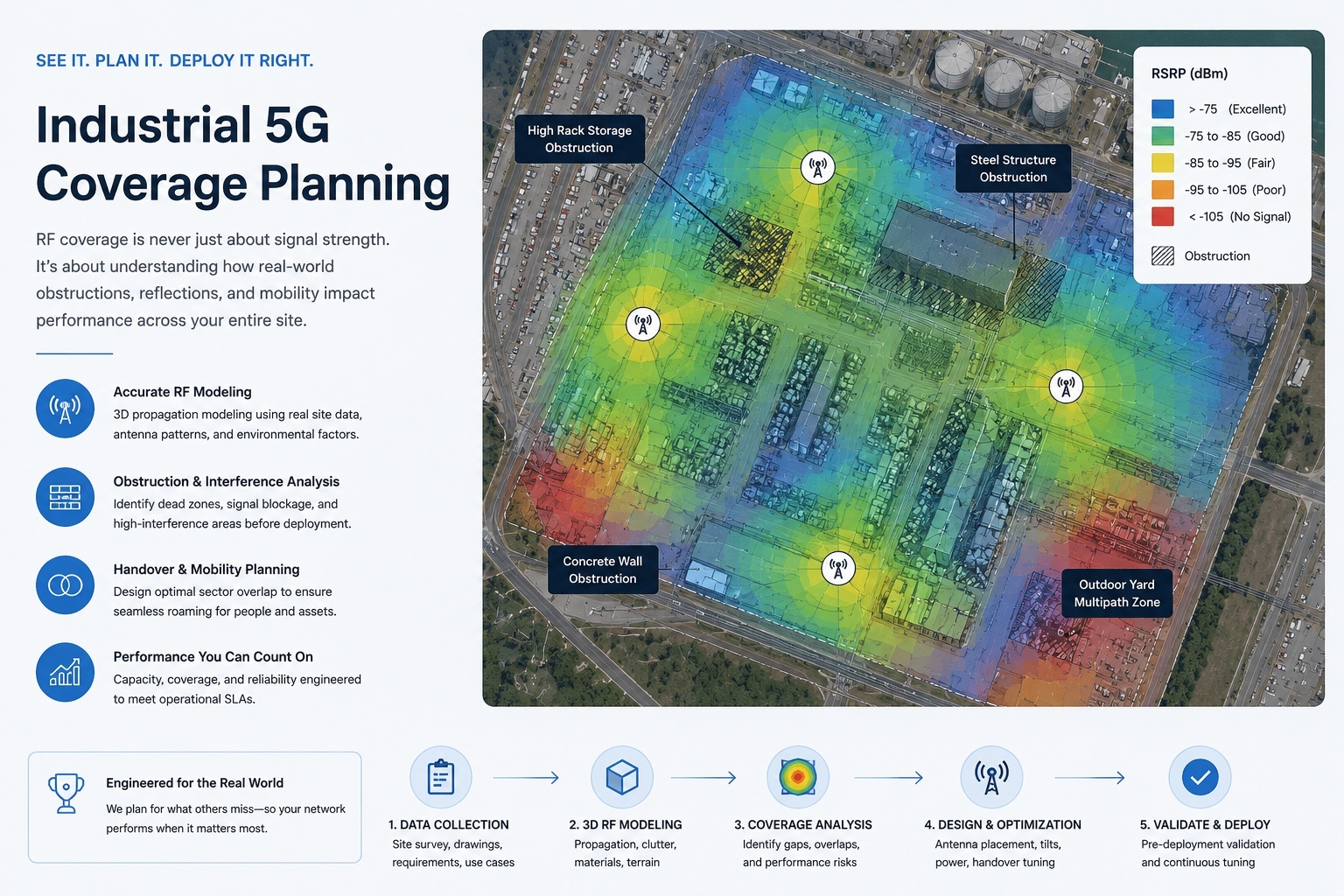
RF coverage planning, propagation analysis, dead-zone identification, hotspot mapping, and interference modelling for industrial wireless environments.
This page is part of the Private5G.ca industrial wireless planning library. It connects practical RF engineering, operational constraints, coverage planning, and deployment design.
Industrial wireless environments are not generic office networks. Concrete, steel, moving equipment, autonomous vehicles, channel congestion, safety zones, backhaul limitations, and operational workflows all affect whether a private LTE or private 5G deployment will work reliably. The right design starts with real site data and disciplined RF planning.
Tell us about your operational environment, coverage challenges, mobility requirements, or modernization goals.